

The Philosophy of Disappearing Design: What Heidegger Teaches Us About the Best UX
Recently, I visited the Van Gogh exhibition at the Tokyo Metropolitan Art Museum. As I stood facing his portraits and landscapes, I was reminded of an essay by a philosopher I had read long ago. That one essay focused on a simple painting of “Pair of Shoes” by Van Gogh. Philosopher Martin Heidegger once wrote that these shoes are not […]

The Group Interview: A UX Researcher’s Guide to Richer Group Insights
One-on-one in-depth user interviews may be the bread and butter of many UX researchers, but group interviews and workshops create a unique opportunity of observable collaboration, negotiation, and debate. When facilitated well, these sessions become living laboratories where one person’s idea can collide or react with another’s, creating new and unexpected findings. The key is to use group interaction itself as a source of data. Achieving this requires a thoughtful […]

UX is not a Set of Boxes, but a Melody: Rethinking Experience Through Bergson’s Concept of Time
In UX design and research, we frequently deal with the concept of time. When we create customer journey maps or refer to frameworks proposed in the “User Experience White Paper” (Roto et al., 2011), we often divide experiences into phases such as “before use,” “during use,” and “after use.” Breaking complex phenomena into manageable phases can be extremely useful in day-to-day […]

Chance Chats Episode 1: The HIV+ Patient
We at Uism pride ourselves in our curiosity. No place is that better exemplified than in the connections we strive to make with a wide variety of people, and expand our knowledge and understanding. These Chance Chats are an opportunity to share what we’ve learned from the people we’ve come across, especially the kind of people who would be difficult to connect with and have the chance for an in-depth […]
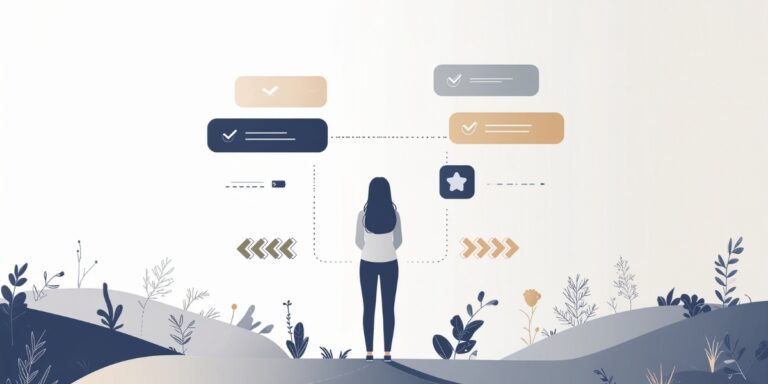
Condemned to Choose: What Jean-Paul Sartre Can Teach Us About UX Design
In the world of UX, we’re often obsessed with a frictionless experience. We strive for usability, speed, and seamless journeys. These are vital, of course. But in our quest for efficiency, are we forgetting something more fundamental? The human experience of choice. Every day, we click, decide, and act through user interfaces. But how free […]

From Curiosity to Clarity: What Kids Reveal About Better UX
A Lesson in Usability from My 4-Year-Old Son One afternoon, my 4-year-old son pointed at the TV remote and asked, “How do I make it louder?” I told him, “Just press the volume button.” But instead of pressing it, he looked at the remote in confusion:“What’s ‘volume’? Which one is that?” In that moment, I […]

Synthetic Users: How Far can AI go in UX Research?
Introduction As UX researchers, we depend on real people to understand their needs, frustrations, and emotional journeys. But what if we could simulate those people instead? With generative AI evolving so quickly, there’s been growing interest in using “synthetic users”, meaning AI-generated personas that respond to research prompts as if they were real. These virtual […]

Inciting an AI Spring: The Importance of UX in AI Developmen5
As generative AI tools like ChatGPT redefine how we interact with machines, it’s more important than ever to ask: Are the foundational principles of UX in AI still relevant? And how should they evolve? That question sits at the heart of this article. AI’s Vicious Cycle Even at its early stages, AI’s potential capability has […]

Why Rock, Paper, Scissors is the Perfect UX System
Did you know that Rock, Paper, Scissors (yes, that universal game we all played as kids), actually comes from Japan? In Japanese, it’s called jan-ken, and while the basic rules are the same, its role in everyday life is far more embedded in the culture than in most Western countries. In Japan, jan-ken isn’t just […]

Design Users to Become the “Overman”: Rethinking UX in the Age of AI Through Nietzsche’s Philosophy
“Don’t make me think.” For years, this phrase—the title of Steve Krug’s seminal book—has been the golden rule in UI/UX design. Reducing user effort, eliminating confusion, and guiding users to their goals as efficiently as possible. This is what we have always believed to be “good UX.” However, with generative AI beginning to take over parts of human work, we ask: Is offering effortless and easy experiences really beneficial for humans? Philosopher Friedrich Nietzsche stated “God is […]