
Article Summary
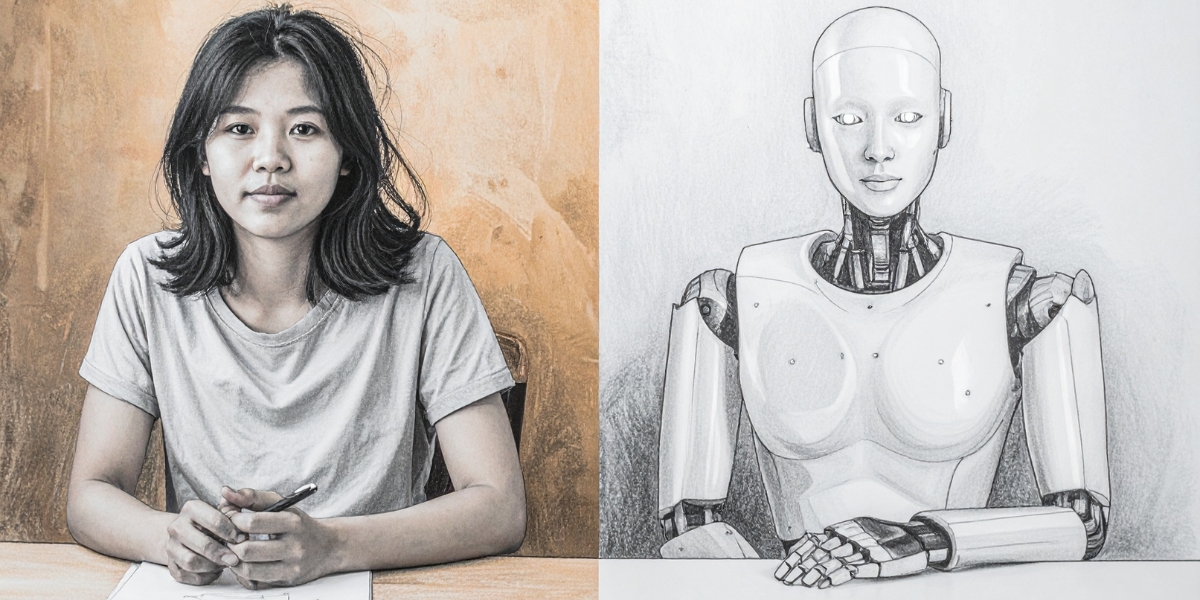
- AI is pushing UX beyond mere ease and efficiency. In the age of automation, the critical question is whether users still feel ownership over the outcome.
- Nietzsche’s philosophy helps frame this tension: design can either turn users into passive consumers or empower them as capable creators.
- This shift demands a new lens for research. It is no longer enough to remove friction; we must identify “Power Points” where products help users feel stronger, clearer, and more in control.
“Don’t make me think” has shaped UX for years. The basic idea is familiar: reduce effort, remove confusion, and help people do what they came to do with as little friction as possible. In many situations, that still makes perfect sense.
But AI makes that principle a little less straightforward.
When a system can now write, summarize, suggest, generate, and even decide on the user’s behalf, it becomes harder to say that good UX is only about making things easier. In some cases, ease may come at a cost. A product may remove effort so effectively that it also removes the user’s sense of involvement.
This is where Nietzsche starts to feel surprisingly relevant.
The Risk of Designing AI Only for Comfort
In Thus Spoke Zarathustra, Nietzsche describes the “Last Man,” a figure who wants comfort, safety, and stability above all else. The Last Man avoids difficulty and no longer tries to become anything beyond what he already is.
It sounds dramatic, but it is not hard to see a version of it in digital products today.
Modern UX often aims to predict what users want before they ask, narrow their choices, and remove uncertainty from the experience. Recommendations reduce the need to explore. One-click actions cut short deliberation. And with AI-generated output, even part of the thinking process can disappear.
Of course, that can be useful. In many products, it genuinely improves the experience. Still, there is a tradeoff here. When a product always anticipates, decides, and acts for the user, the interaction may become more convenient, but also more passive. The user does less, thinks less, and shapes less.
Nietzsche would probably ask whether some forms of UX are doing more than helping. They may also be teaching users to expect less of themselves.
Good UX Is Not Only About Removing Friction
Nietzsche’s counterpoint to the “Last Man” is the Übermensch, often translated as the “Overman.” This is not simply a stronger or more successful person. It points to growth, self-overcoming, and the effort to become more than one already is.
At the center of this idea is the “will to power,” which Nietzsche uses to describe the drive to develop one’s abilities and actively shape the world. For UX, the interesting part is what this idea pushes us to ask.
What if the best experience is not always the one that asks the least of the user?

What if, in some contexts, the more meaningful experience is the one that helps users think more clearly, express themselves more fully, or do something they could not do before?
That does not mean making products difficult for the sake of it. It means recognizing that some of the best experiences are not just frictionless. They are enabling.
Will AI Replace Users, or Extend Them?
This may be one of the most important design choices in the AI era. Some AI experiences are built around substitution. They take over the task and let the user step back. The message is simple: “I’ll handle it for you.” Others are built around augmentation. They still reduce effort, but they keep the user involved in shaping the outcome. The message is closer to: “You are still the one thinking, deciding, and creating. I’m helping you do it better.”
We have explored this same question from a broader product development perspective in our article on the importance of UX in AI development.
Related Article
Explore why great AI products need more than powerful technology, and how UX builds the trust, context, and usability that drive real adoption.
That difference changes the experience quite a bit.
A system that drafts and sends a message with almost no meaningful user input is substitution-oriented. A system that helps users organize rough ideas, test options, or sharpen an argument is doing something different. It is not just completing the task. It is helping the user do better work.
The question is not whether AI saves effort. It clearly does. The more important question is what remains in human hands after that effort is reduced.
- Does the user still feel authorship?
- Does the system support judgment, or quietly replace it?
- Does the interaction build capability over time, or only encourage dependence?
Those questions are becoming central to UX.
What Empowering AI Design Can Look Like
Adobe Photoshop offers a useful example. Its AI features can suggest edits that once required significant skill. But the experience does not stop at automation. Users can adjust parameters, compare options, refine the output, and decide what the final result should be.
What makes that experience valuable is not just speed. The user still has room to shape the result, and that means judgment still matters. There is still something to learn, and over time that learning turns into control. Users can gradually gain more confidence and a stronger sense of mastery.
They do not simply receive an answer from the machine. They work with it. That is the kind of experience that feels empowering. The tool is not just doing the job for the user. It is helping the user become more capable.
Not Every UX Needs to Aim for Growth
None of this means every product should suddenly become challenging. In many contexts, traditional usability principles remain exactly right. Public services, financial workflows, medical systems, administrative tasks, and routine dashboards often need clarity, predictability, and low cognitive load. In those cases, “Don’t make me think” is still a very good rule.
So the point is not that friction is good, or that all products should be designed around self-overcoming. The point is that design goals should match the kind of experience being created.
If the goal is routine completion, ease may be the right measure of success. If the goal involves thinking, writing, learning, creating, or making sense of complexity, then ease alone may not be enough. In those contexts, a better question is whether the product helps users become more capable, more confident, or more expressive than before.
How AI Changes UX Research
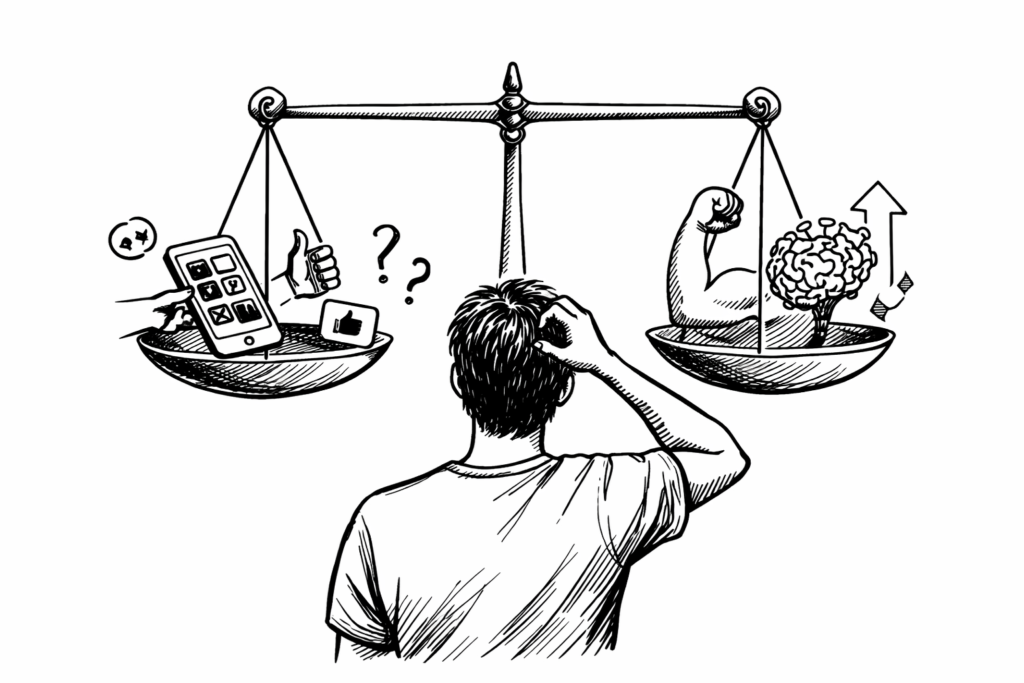
If we take that seriously, UX research also has to change. Traditional usability testing has focused on finding pain points. Where do users hesitate? Where do they get confused? Where do they fail, slow down, or make mistakes? Those questions still matter, and they always will.
But for AI-supported tools, they are not the whole picture. Some difficulty is not necessarily a sign of poor UX. In some cases, it is part of learning. A bit of trial and error may be what helps users understand the system, gain control over it, and eventually use it with confidence.
That is why UX research may need a second lens alongside pain points. We also need to identify what we might call power points: moments where users feel more capable, more in control, more expressive, or simply better able to do the task than they were before. In our own research work, we have often seen that the strongest engagement does not come from removing all ambiguity. It comes when people still have room to interpret, respond, and make the experience their own.
We explore a related shift in more practical terms in What Adobe’s Market Turbulence Reveals About the Future of UX Research.
Related Article
Explore how AI is reshaping UX research, shifting the focus from only pain points to also understanding the moments that make users feel more capable and in control.
It also changes what we should be asking in research.
Do users feel that they are in control of the AI’s output?
Is the friction in the experience helping them grow, or just making things harder?
Do they feel more capable after using the tool?
Do they understand how to refine or challenge its suggestions?
Where do they feel not only ease, but increased agency?
These are not just usability questions. They are questions about capability and ownership.
In the AI era, finding pain points will still matter. But finding power points may matter just as much.
Designing for More Than Convenience
Nietzsche’s language is extreme, of course. But the question underneath it is hard to ignore.
What kind of people are our products shaping?
AI gives us tools that can act on our behalf in powerful ways. That creates real value. But it also creates a choice. We can design systems that make users more passive, or systems that help them become more capable. We can design for comfort alone, or for comfort plus growth. Not every product needs to aim at the same outcome. But in products that support human thinking and creativity, that distinction matters more and more.
Maybe the best UX is not only about making things easier.
Maybe at its best, UX helps people become more than they were before.
References:
UX Research & Strategy
Learn more about Uism’s UX research services.
Related Articles: