

Recently, I visited the Van Gogh exhibition at the Tokyo Metropolitan Art Museum. As I stood facing his portraits and landscapes, I was reminded of an essay by a philosopher I had read long ago.
That one essay focused on a simple painting of “Pair of Shoes” by Van Gogh. Philosopher Martin Heidegger once wrote that these shoes are not just objects, but they reveal the entire “world” of the peasant who wore them. For the peasant, the shoes are one of the ordinary tools in their daily labor, but for those of us who stand before the painting, these shoes become objects that quietly tell the story of a person’s life.
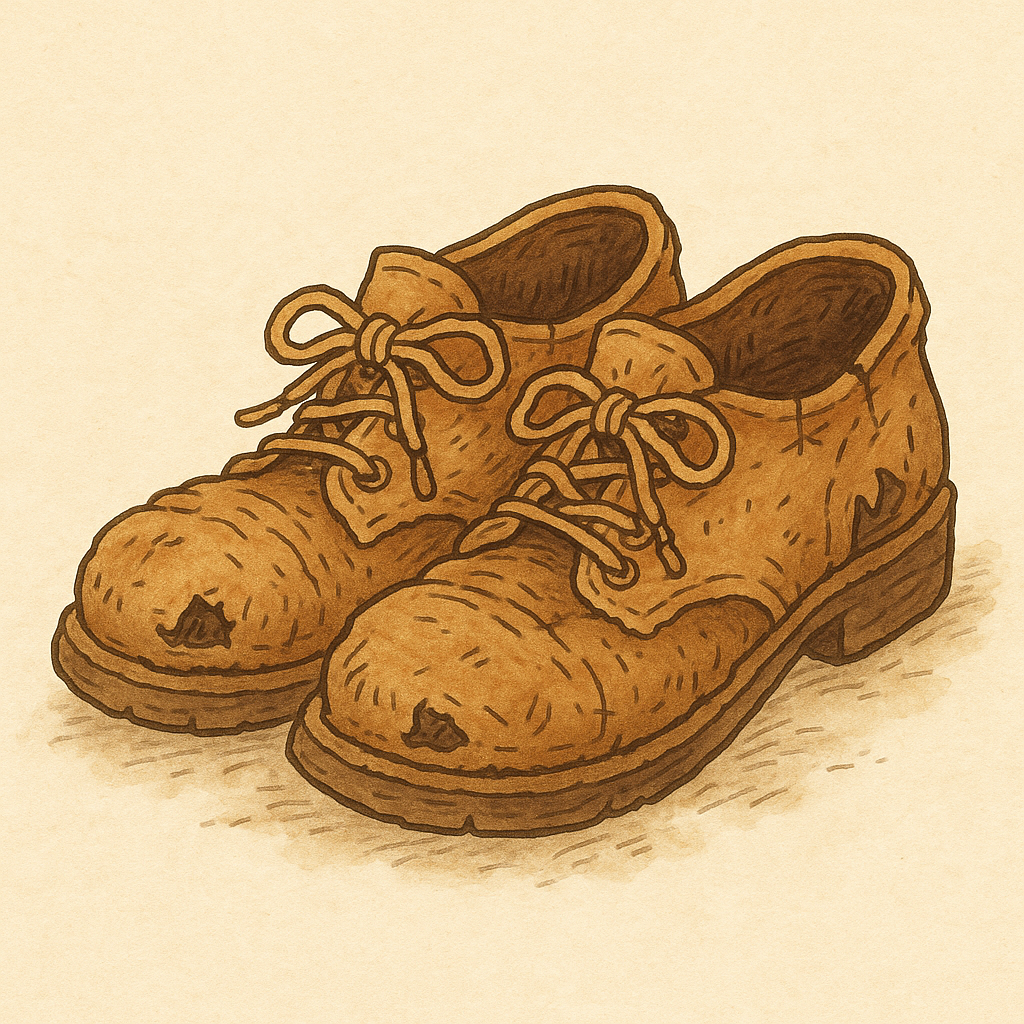
Walking through the Van Gogh exhibition, Heidegger’s words came back to my mind.
And naturally, that reflection led me to think about our own work in UX design.
What if the best user experience is one that users don’t notice at all? One that allows them to forget the product entirely and immerse themselves in their own goals? Inspired by my visit to the Van Gogh exhibition, this article uses Heidegger’s philosophy as a lens to explore what we might call a “disappearing design”. While this may sound philosophical at first, it leads to a surprisingly simple insight of why some apps feel easy to navigate while others feel frustrating.
Two Types of Tools: Heidegger’s Hammer
Heidegger illustrated two different ways a tool can exist, using a carpenter’s hammer as an example.
- The Invisible Tool: When a skilled carpenter hammers a nail into wood, their attention is not on the hammer itself. They are focused entirely on the task. The hammer becomes an extension of the hand and fades from conscious awareness. This, Heidegger argued, is the way a tool is meant to exist.
- The Visible Object: But what if the hammer’s head were loose? The carpenter must stop working. The hammer suddenly needs to be fixed. It is no longer helping with the task but interrupting it. At that moment, the tool stopped being a tool.
The Core of UX Design
This idea is more than an abstract philosophy. In fact, it forms the foundation of what later thinkers such as Don Norman would describe as an “Invisible Design”. The principle is simple. The best tools help people achieve their goals without calling attention to themselves. Despite Heidegger’s idea being nearly a century old, it captures the essence of modern UX design with great accuracy. His two ways of understanding tools can be applied to the difference between good user experiences and bad user experiences.
When we use a great map application, we don’t think about the button placement or visual design. We only think about where we are going. Before we know it, we arrive at our destination. The same is true when listening to music through a streaming app. Our attention is on the music, not on the interface. In these moments, the product disappears from our awareness.
By contrast, when an app crashes, responds slowly, or makes important features hard to find, we are pulled out of our task. The product stops being the stepping stone to our goal and becomes the obstacle itself. This is where frustration begins.
From this perspective, the ultimate goal of UX design becomes clear. It is to keep the product functioning as a transparent tool for as long as possible. In other words, design something that disappears.
What “Disappearing Design” Teaches Us
From Heidegger’s lens, we can draw three key lessons for UX design:
Design is not just about beautiful screens. Just as Van Gogh’s shoes are inseparable from the world of peasant labor, the products we design are part of a user’s life and work. Without a deep understanding of that world, it is impossible to create tools that truly disappear. This is why UX research is essential. It grounds design decisions in the reality of how people live and work.
Unnecessary steps, unclear language, and excessive choices all become obstacles that pull users out of immersion. Reducing these barriers is one of the most practical ways to keep a product invisible to the user, allowing them to focus fully on what they are trying to accomplish.
A good example is Amazon’s one click ordering. By removing the need to repeatedly enter address and payment information, it allows users to focus entirely on their goal of buying a product. The complexity of the purchase process fades into the background.
Bugs, crashes, and unexpected errors turn invisible tools into visible objects. Stability is not just a technical concern. It is one of the most important elements of user experience.
Conclusion
Great design does not demand attention. Instead, it allows users to forget it exists and focus fully on what they are trying to achieve, much like a well-crafted tool that becomes the extension of your hand.
Perhaps UX designers are the craftspeople of the modern age, creating tools that quietly support users in the background. By respecting the world users live in, we help them focus on what matters most: living their own stories.
The kind of disappearing design discussed here always begins with deep research into the user’s world. At Uism, we support UX research with exactly this purpose in mind. If you are interested in creating richer and more meaningful user experiences, we would be happy to hear from you.
Related Articles:

Can AI-generated participants truly understand a user’s “world,” or does disappearing design still depend on real human insight?

A reflection on how thoughtfully crafted environments fade into the background, allowing users to fully immerse themselves in the experience itself.