

Today, I’d like to begin this blog with a simple question.
What does “the best user experience” mean to you?
If an answer came to mind right away, it’s probably because that experience moved you so deeply that it engraved itself into your memory. And yet, the more powerful an experience is, the harder it often becomes to explain why it was so good.
Recently, I unexpectedly found a hint to that answer at a hot spring ryokan in Kyushu. A ryokan is a traditional Japanese inn. But it’s more than just a place to sleep. It is a space where architecture, food, nature, and human hospitality are carefully woven together to create a single, holistic experience.
That particular ryokan offered me an experience that seized my heart and carved itself deeply into my life’s memories. Why did it feel so extraordinarily special? Today, I would like to reflect on that feeling and explore what lessons it holds for the work we do every day, especially in the field of UX design where crafting memorable experiences is our mission.
It All Began with a Small Surprise
When we arrived at the ryokan hidden in the mountains, the owner himself came out to greet us. After we checked in, he said something unexpected.
“We had a cancellation today, so we have upgraded your booking to a room with a larger hot spring. The entire inn is to yourselves.”
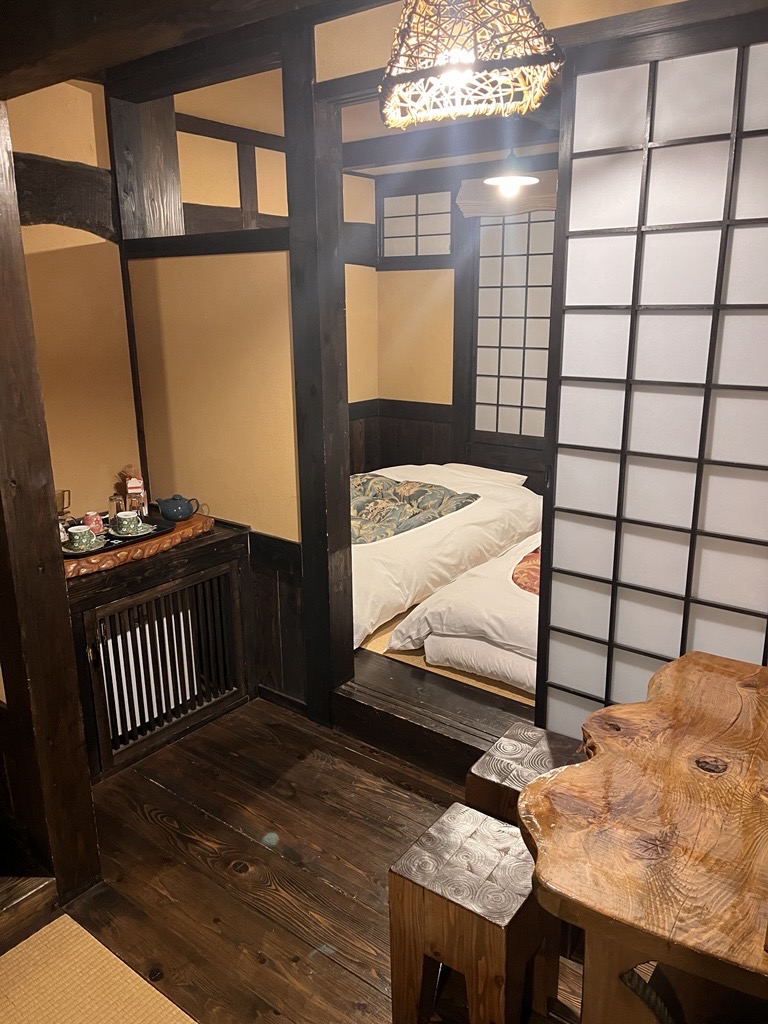
My heart leapt at this unexpected news. We were welcomed to the room with a large family-sized hot spring. Inside, the space felt warmly nostalgic. At its center was a Kotatsu, a traditional Japanese heated table covered with a blanket, with mandarins and traditional Japanese sweets placed on top. On the shelf sat a tea set, and in the adjoining tatami room, soft futons (traditional beds), were already prepared. There was even a coffee mill for grinding beans by hand, as well as a colorful selection of yukata (casual kimono), that we could choose from.
Each detail in the room was small on its own, yet together they created a space that felt calm, welcoming, and intentional. The owner’s explanation of the room also left a strong impression. It was not simply list of facilities, but a thoughtful guide to how he hoped we would spend our time there.
In UX design, it is often said that the first experience determines the overall impression. The moment I stepped into that room, I was certain that the stay would be wonderful. Nothing had really begun yet, and still, I already felt satisfied.
More details about UX design here
Every Moment Connected Through a Story
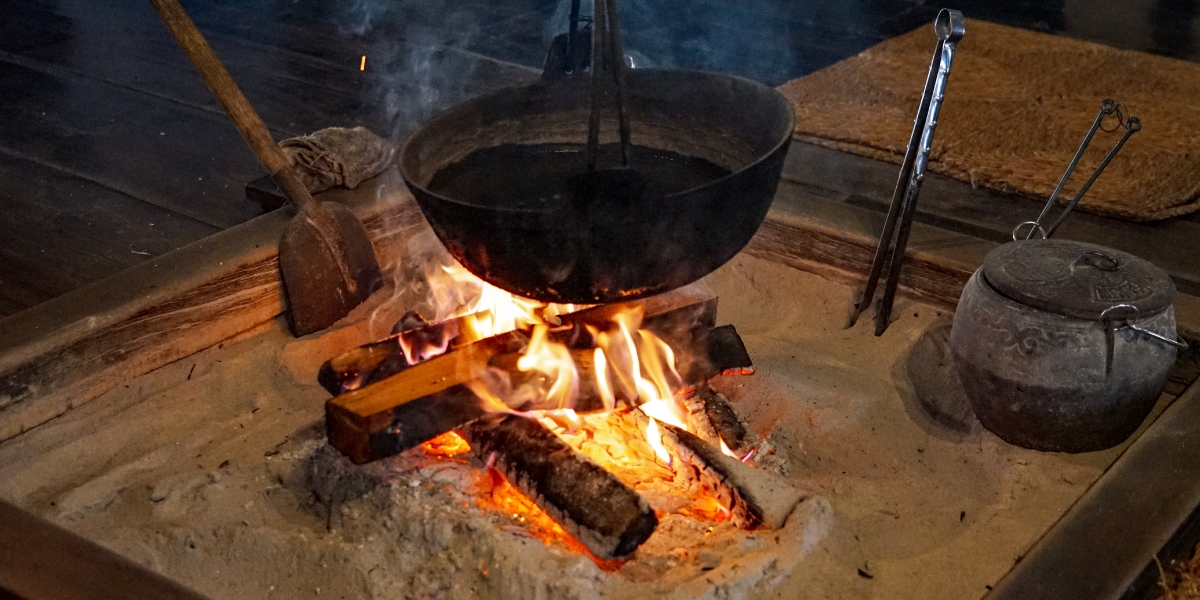
Dinner was served in a private room with an irori hearth, a traditional sunken fireplace used for cooking and gathering warmth.
Fresh local vegetables and meat were grilled right in front of us. What moved us was not only the flavor. With each dish that arrived, the staff shared the story behind it.
“This meat is raised on a specific diet.”
“This style of skewer has been enjoyed in this region for generations.”
As we ate, it felt as though we were also experiencing the culture, history, and daily life of the people who lived there. The meal carried a depth that went far beyond the food itself.
When we casually mentioned that we had yet to decide our plans for tomorrow, the staff immediately unfolded a map in front of us. He explained the local geography and helped us plan an itinerary that fit perfectly with our flight time.
Perfect Timing and Space
After dinner, we were kindly told that the dessert would be brought to our room later.
Just as we settled into our warm room, a knock sounded at the door. When we opened it, the owner stood there holding a dessert plate lit with candles. It was a surprise I had quietly arranged to celebrate my friend’s birthday.
What was impressive was the staff’s perfect timing and the way they gave us just the right amount of space. I had assumed the dessert would be served in the dining room, but instead, they waited until the exact moment when the two of us were completely relaxed in a private setting.
After handing us the plate, the staff member said simply, “Happy birthday,” and added, “please let me know when you are ready, and I will take a photo for you.” Then he quietly stepped out of the room.
This is a key part of Japanese hospitality: the ability to “read the room” (空気を読む) – noticing unspoken signals and acting accordingly. He respected our space and time together. Only after we had fully shared the moment did he return to take the photo. I felt that this was only possible through truly deep hospitality.
Emotion that Never Faded
That night, a staff member turned off the lights for us to see the stars clearly. As guided, we stepped out of the inn and looked up.

We both caught our breath. Countless stars filled the sky, feeling so close it seemed as if we could reach out and catch them. It was a scene you would never encounter in the city, one that seemed to be gleaming with light. We stood there in silence, simply absorbing the moment. That quiet felt like the greatest luxury of all.
When we returned to the room, the private hot spring was waiting for us. In the cool night air, we sank into the warm water, the only sounds being the gentle flow of water and the distant chirping of insects.
The next morning was my friend’s birthday. We woke up early, began the day by grinding coffee beans in the room, and drove up to the observation deck. In the cold, crisp air, the sun rose like a blessing for the year ahead.

After returning to the inn and enjoying a morning hot spring, one final moment of surprise awaited us at breakfast. The table was covered with countless small dishes. Once again, the staff shared the story behind each one.
This hospitality never faded, bringing our stay to a perfect conclusion. Even after it ended, the experience remains vivid in my memory.
The Best User Experience is Engraved into Memory
Reflecting on this experience, I realized something interesting.
Despite how much I enjoyed the stay, I barely had any photos of the ryokan on my phone. I must have been so immersed in the experience that I forgot to take pictures. Now I understand that this is the proof that I was living in the moment.
Great user experiences are not created by convenience or clarity alone. This stay at the ryokan taught me that deeply. They emerge when
there is a moment that exceeds expectations,
extraordinary care is taken to understand the user’s situation and emotions,
and each moment is thoughtfully connected to the next.
These layers accumulate and, over time, become memories that are engraved in our minds.
We cannot recreate this ryokan experience when building products or services. However, the mindset at its core is something we can implement in our everyday work: deep consideration for others and a strong desire to deliver the best possible experience.
How far can we extend our imagination to understand a user’s day and the emotions they feel along the way?
This journey reminded me that holding onto that perspective is the true foundation of our work.