

✶Article Summary
- •Seniors aren’t tech-averse, just frustrated. Designing for them unlocks a massive, high-value market.
- •Seniors often internalize usability issues as personal failure; design to build confidence and a sense of achievement.
- •Stop treating seniors as an edge case. Making them a core user ensures future business relevance.
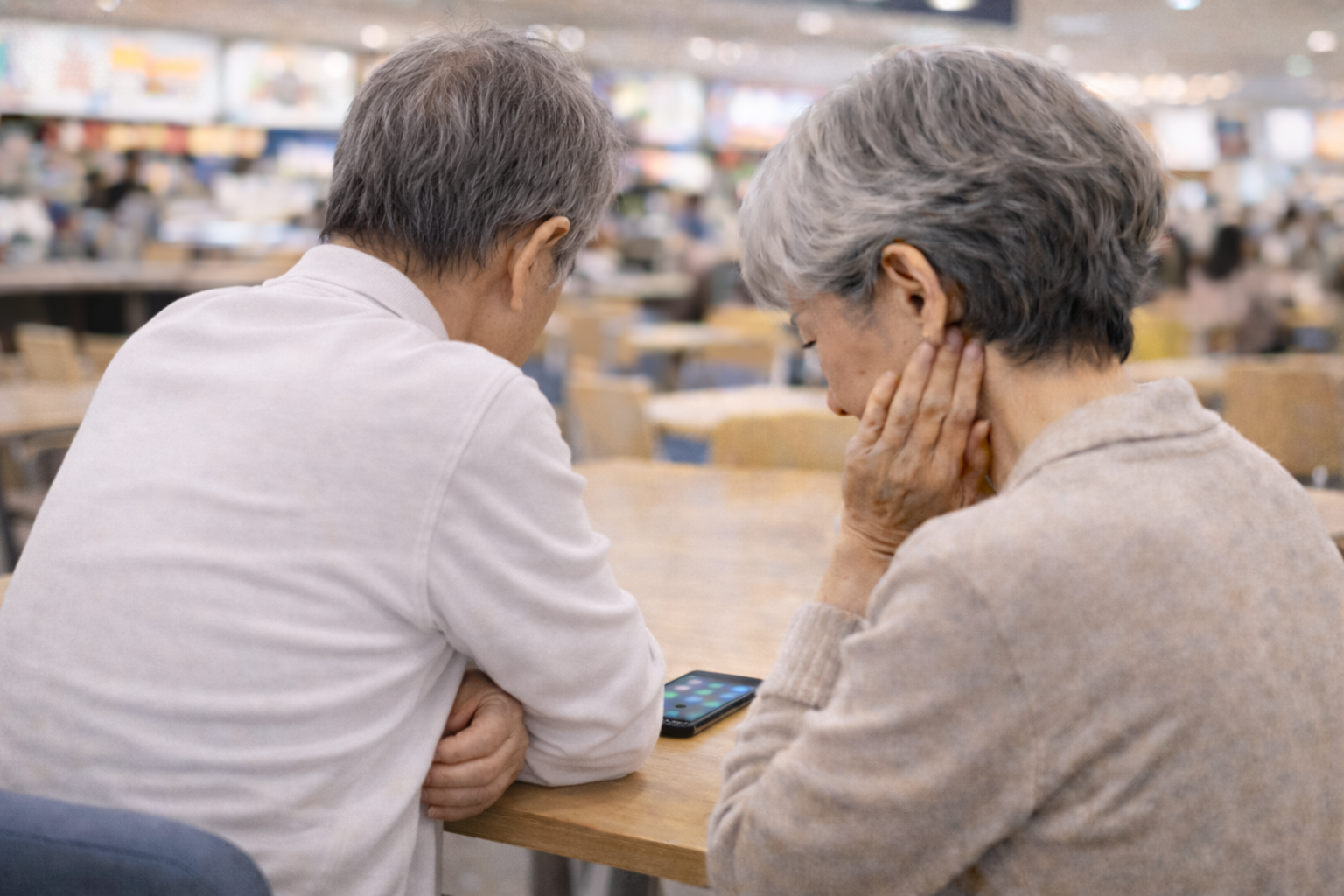
The other day at my local food court, an elderly couple sitting next to me was looking anxiously at their smartphone.
-8.png)
They were probably trying to register for some kind of membership. From the fragments of conversation I overheard, it was clear how they were struggling.
As a UX researcher, whenever I witness scenes like this, I always come back to the same question: Are today’s so-called “convenient” digital services truly usable for everyone?
We fully understand that developers and designers work tirelessly every day to create better experiences for users. Precisely because of that, I want to pose a deliberate question.
There may be an invisible wall between the services you’ve carefully built and the users they are meant to serve. When you picture your users, who do you see? And does that image truly reflect Japan’s future demographics?
Based on our extensive UX research, this article analyzes the specific psychological patterns of seniors using digital services and provides a framework for turning these insights into tangible business opportunities.
Introduction
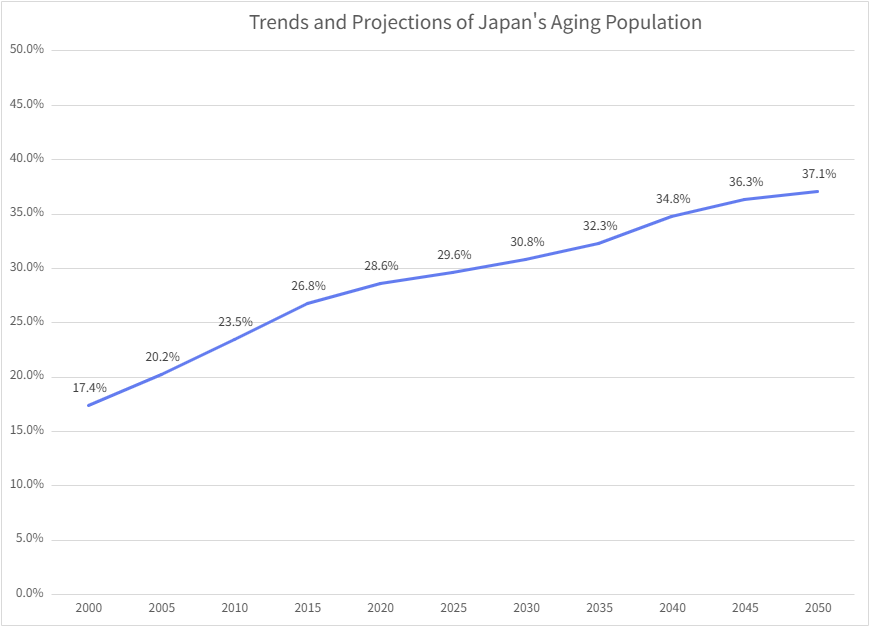
By 2025, Japan entered an unprecedented phase of what is often called a “super-aging society.” All members of the so-called baby boom generation are now 75 or older, and nearly one in three people in the country are aged 65 or above. This far exceeds the benchmark defined by the World Health Organization (WHO), which classifies a society as “super-aged” when more than 21% of its population is 65 or older. What is crucial to understand is that this is not the peak, and the proportion of older adults will continue to rise. This demographic shift is no longer an issue anyone can pretend to ignore.
Such changes are often discussed in the context of pensions, healthcare systems, and transportation infrastructure. However, it also extends to digital services, which form the modern infrastructure that lays out the foundation of our daily lives.
The shift to smartphones and the digitalization of public services are no longer trends that spare any age group. Yet behind this digitalization, many older adults find themselves overwhelmed by the complexity of digital interfaces. As a result, the “digital divide” continues to widen, leaving them at risk of being excluded from modern conveniences.
This is not simply a personal issue of being “bad at technology.” It is a challenge for those of us in UX design to address. At the same time, it can also be seen as a great business opportunity.
In this article, we will examine the importance of UX for older adults through the lens of today’s social context, while exploring what we should consider next and how we should respond.
1. The Overwhelming Importance of UX for Older Adults in Social Context
Why should we focus so closely on the user experience of older adults right now? The answer lies in three clear facts within our reality.
1-1. The “Irreversible” Reality of a Super-Aged Society
As mentioned earlier, Japan’s aging population is not something that lies ahead in the future. It is an ongoing reality. The country is now confronting what is often referred to as the “2025 problem,” as the baby boomer generation turns 75 and enters the late-stage elderly demographic. This shift is challenging not only social security systems, but also the design of services that support our daily lives. Are your products and services built with a strategy that reflects this rapidly expanding segment of the population?
1-2. Senior Digital Use Isn’t “Someone Else’s Problem”
It is no longer accurate to assume that older adults do not use technology. In Japan, many seniors use messaging apps like LINE, shop online, read the news, and manage their health through apps, similar to younger generations.
It is not that they do not want to use digital services. They do, but the only thing standing in their way is the difficulty of digital service usage.
1-3. The Senior Market as a Great Untapped Opportunity
Beyond its population size, the senior demographic often has greater time flexibility, substantial purchasing power, and strong willingness to spend. If we understand their challenges and create services that make them think, “now this is something I can use,” we step into a largely untapped market with few competitors. What is dismissed today as “too hard to use” can become new demand through better UX.
Investing in UX for older adults not only helps address the social issue of the digital divide. It can also be a strategic move that elevates your business into its next stage of growth.
2. Psychological Barriers and Internal Mechanisms Behind Senior Digital Adoption
So what do older adults actually feel when they use digital services and products? Drawing from extensive UX research, here are some common patterns we have observed. These patterns are not unique to seniors, but they can become barriers that discourage engagement.
2-1. A Self-Denying Attitude That Comes Before Action
In interviews, many participants began by saying, “I don’t think I can do it,” or “isn’t that something for younger people?” Behind these remarks lies a strong preconceived belief that they are not capable. This internal narrative often prevents the very first attempt. When someone has adopted this mindset of “this is not for me,” no matter how excellent the service may be, they may never reach it. What is needed, therefore, is a design that lowers this initial psychological hurdle, and a design that makes this first step easier.*1
2-2. Psychological Resistance to Step Away from Familiar Products
We also frequently hear comments such as, “what I’m using now is good enough,” or “I don’t want to learn everything all over again.” These statements can be understood as extensions of the internal attitude described above. Users may genuinely feel satisfied with the products and services they have accustomed to, and from their perspective, there may be no compelling reason to switch. However, if trying something new could lead to a better quality of life, it is the role of UX design to remove that resistance, and UX research is how we uncover the insights to do so.*2
2-3. Internalizing Lack of Understanding as Personal Failure
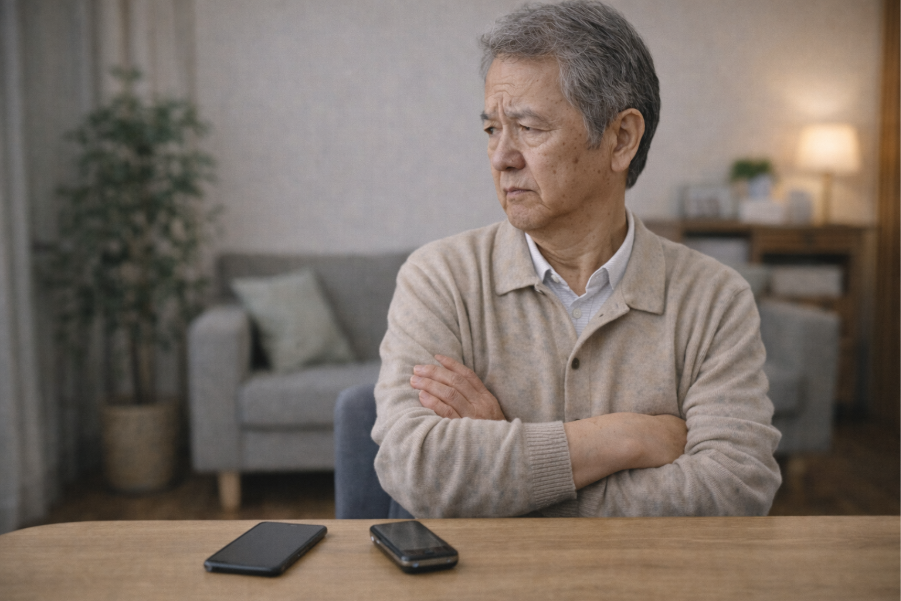
Another statement we come across often are things like, “I must be doing this wrong,” or “it’s embarrassing that I can’t even do something like this.” These statements reveal more than simple confusion. They reflect a tendency to internalize difficulty as personal inadequacy, as well as the reluctance to make mistakes or inconvenience others. When users carry this sense of self-blame, they may hesitate to explore, experiment, or engage fully with a product or service. From a UX perspective, however, the responsibility does not lie with the user. If something feels confusing or intimidating, it is the product or service that must be improved. *3
2-4. That Moment of ‘I Can Do This’
While we have outlined several negative patterns, older adults also have a great capacity to transform these thoughts into positive ones. We see this in comments such as, “I did it!” or “it’s actually easier than I thought.” Even if participants express doubt or hesitation at first, that uncertainty often fades as they gradually become familiar with the product or service. In this moment, we start to see a visible spark in their eyes. That spark is pride. It is self-respect. For anyone designing UX for older adults, recognizing this potential is critical. Good UX for older adults is not just about making things easier to use. It is also about creating moments that restore confidence, reinforce dignity, and help users feel capable. *4
This theme is explored in greater depth in the following article:
Related Article
Effective UX design for older adults isn’t just about usability. It’s about creating experiences that build confidence and a sense of accomplishment. This article explores this concept in depth.
Conclusion: Designing the Future of Society and Business
In this article, we have explored why UX for older adults is no longer an optional consideration in modern Japan, and rather a priority.
Great digital services have the power to prevent social isolation among older adults, extend healthy life expectancy, and encourage lifelong learning and participation in society.
Looking ahead, AI technologies may bring transformative change to this field. They have the potential to significantly lower physical and cognitive barriers that older adults often face.
Yet we must remember that AI is not a magic wand. No matter how advanced technology becomes, it cannot independently answer critical questions such as:
What language reassures users and builds trust?
At what moment do users feel anxiety?
What kind of support are they truly seeking?
The answers to these questions can only emerge through UX research. Most importantly, addressing this issue is also a major opportunity for business growth.
Is your service truly usable for everyone? Are your target users aligned with the market for the future?
Let this article be an opportunity to reexamine your products and services through the lens of older adults.
If you are unsure where to begin, or if you would like a deeper and more objective understanding of your user base, reach out and speak with us at Uism. As UX research specialists, we go beyond reporting findings. We uncover the essential insights beneath the surface and translate them into concrete recommendations that directly support your business objectives.
References:
- *1: Levy, B. (2009)
- *2: Mitzner, T. L. et al. (2010)
- *3: Wilkowska, W., & Ziefle, M. (2009)
- *4: Heart, T., & Kalderon, E. (2013)
UX Research & Strategy
Learn more about Uism’s UX research services.