
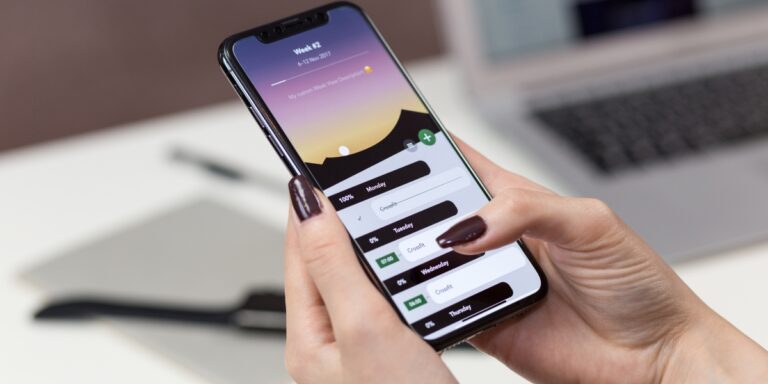
Beyond Clicks: How Behavioral Science Transforms Health Apps
Have you ever committed to losing weight, downloaded a health app, and then quit after a few days? You’re not alone, and you’re not to blame. In a world saturated with digital innovations, countless apps and services are designed to support healthier living. Yet changing health behavior remains difficult. It requires not only adopting new […]

Tiny Cars, Huge Impact: What Japan’s Kei Vehicles Teach Us About UX
Introduction: Japan’s Unique Mobility Needs Hidden in Plain Sight Global automotive trends are racing ahead—electrification, autonomous driving, connected cars. Japan is keeping up technically, but if you glance at the country’s best-selling vehicles, something seems… off. Among all this cutting-edge progress, why are Japan’s streets dominated by boxy, ultra-compact vehicles called “kei cars”? In 2024, […]

Synthetic Users: How Far can AI go in UX Research?
Introduction As UX researchers, we depend on real people to understand their needs, frustrations, and emotional journeys. But what if we could simulate those people instead? With generative AI evolving so quickly, there’s been growing interest in using “synthetic users”, meaning AI-generated personas that respond to research prompts as if they were real. These virtual […]

UX Trap of Japanese Toilets: Why Icons aren’t Always Universal
Japan has a long history of taking ideas from other cultures and refining them into something uniquely Japanese. Toilets are no exception. They’ve been transformed into high-tech marvels, complete with heated seats, bidets, dryers, self-cleaning functions, sound masking, all integrated into a compact Washlet. But here’s the twist. For something so advanced, there are countless […]

Redefining Ma (間) in Japanese Digital Aesthetics
Empty space, leaving things out, can speak more strongly than putting them in, and I think that’s very Japanese. — Hiroe Swen (Ceramic Artist) Ma (間), meaning gap, pause, or space, is a spiritual concept of emptiness deeply rooted in Japanese art and culture. It represents the beauty found in the space between things and […]

Design Users to Become the “Overman”: Rethinking UX in the Age of AI Through Nietzsche’s Philosophy
“Don’t make me think.” For years, this phrase—the title of Steve Krug’s seminal book—has been the golden rule in UI/UX design. Reducing user effort, eliminating confusion, and guiding users to their goals as efficiently as possible. This is what we have always believed to be “good UX.” However, with generative AI beginning to take over parts of human work, we ask: Is offering effortless and easy experiences really beneficial for humans? Philosopher Friedrich Nietzsche stated “God is […]
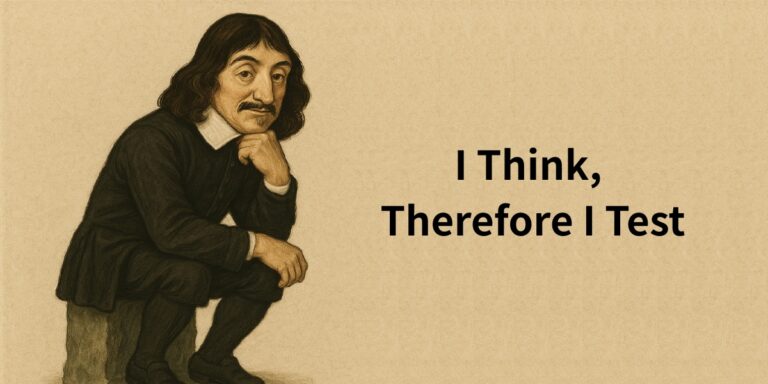
I Think, Therefore I Test: What Descartes Can Teach Us About UX
What can a 17th-century philosopher teach us about UX? Surprisingly, quite a lot. One of the most famous phrases in philosophy comes from René Descartes: “I think, therefore I am.” For him, this wasn’t just proof of existence. It was the starting point of an intellectual journey to find absolute certainty through radical skepticism. Centuries later, this […]

Magic Bags vs. Rescue Rangers: Comparing Food Waste Apps Across Cultures
Studying abroad, I stumbled upon an app that quickly became a daily essential: Too Good To Go. This wildly popular European platform transforms leftover food from cafes and restaurants into “magic bags”, at a wallet-friendly price. Every time I placed an order, I’d find myself eagerly heading to the venue, wondering what goodies awaited me […]

Translation as Treason: Preserving Cultural Nuance in Global Research
In The Book of Tea, Okakura Tenshin remarked, “Translation is always a treason, and as a Ming author observed, can at its best be only the reverse side of a brocade — all the threads are there, but not the subtlety of color or design.” This powerful statement highlights the fundamental challenge of translation: no […]

What is an “Insight” and How is it Different from a Finding?
In UX research, the term “insight” is frequently used. If you work in product development or marketing, you’ve likely heard it many times. However, despite its widespread use, “insight” is often confused with another term: “finding.” In the context of UX research, which seeks to deeply understand users’ experiences and improve products or services based […]