


Article Summary
- Bachelor Date is a Japanese AI-powered dating app designed to make dating more efficient by reducing swiping, messaging, and decision fatigue.
- Its most distinctive UX feature is a tier-based rating system, where users evaluate each date on appearance, conversation, and overall experience, and those scores influence future matches.
- Bachelor Date reveals what most dating platforms keep hidden: how ratings, algorithms, and gamified feedback loops shape romantic behavior, self-presentation, and expectations.
Introduction
Dating in Japan has long had systematized forms of matchmaking, from traditional omiai arranged meetings to the group dating culture of gōkon. So perhaps it’s not surprising that a dating app built on guaranteed efficiency has found traction here.

Bachelor Date is an AI-powered dating app, using profile information, preferences, and post-date evaluations to arrange future matches. No swiping through hundreds of profiles. No conversations that go nowhere. The algorithm matches you, schedules the meeting, and then you both evaluate the experience through a mandatory rating system.
The summer version of the app icon features fireworks, reflecting one of Japan’s most popular seasonal date activities.
Bachelor Date is an AI-powered dating app, using profile information, preferences, and post-date evaluations to arrange future matches. No swiping through hundreds of profiles. No conversations that go nowhere. The algorithm matches you, schedules the meeting, and then you both evaluate the experience through a mandatory rating system.
After using the app for a month, what stood out was not whether the app “worked” or not. What became more interesting was how the system itself shaped behavior. Bachelor Date creates a dating environment where users are meeting potential partners, but also constantly adapting to being evaluated, scored, and ranked.
This article is not a recommendation of the app, but a UX reflection on what happens when dating is designed around efficiency, feedback loops, and algorithmic evaluation.
How Bachelor Date Works
The onboarding takes about 10 minutes. Unlike many dating apps, there is no need to spend a long time crafting perfect self-introduction.
You provide:
- Basic demographics (age, facial features, occupation)
- 2-3 photos
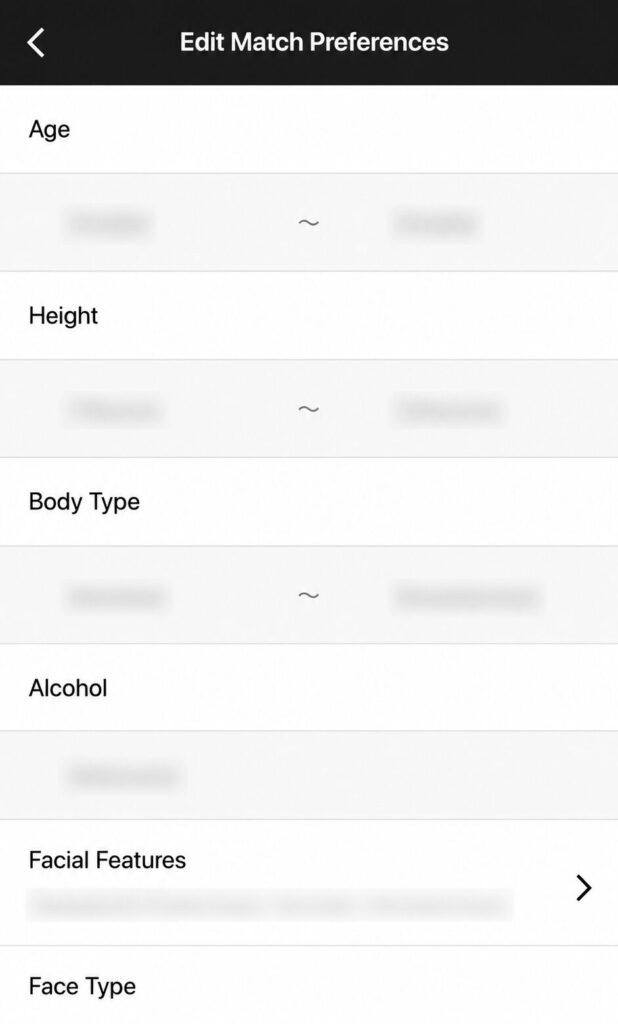
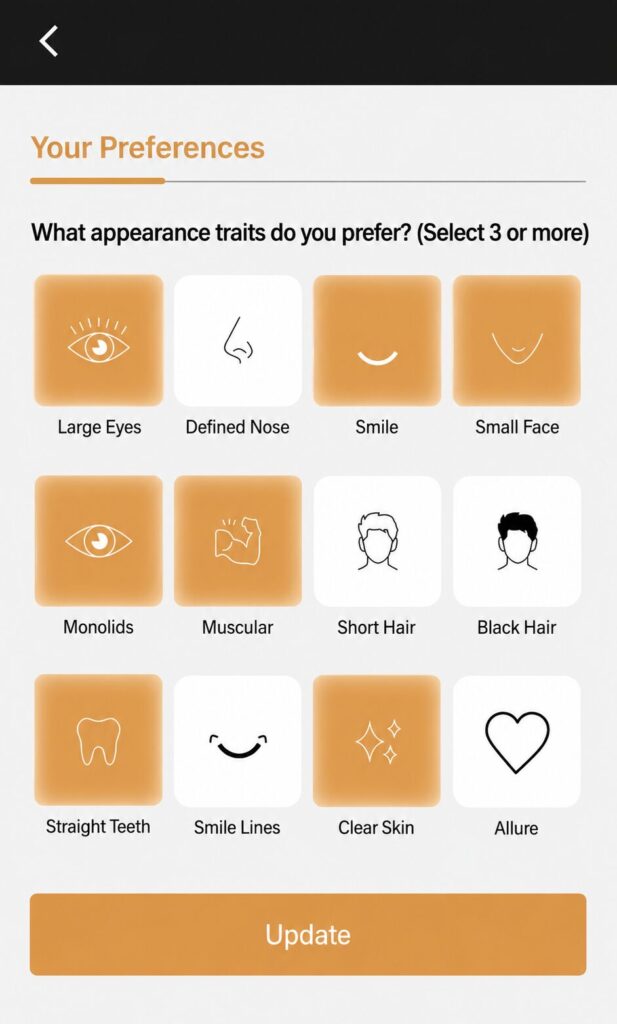
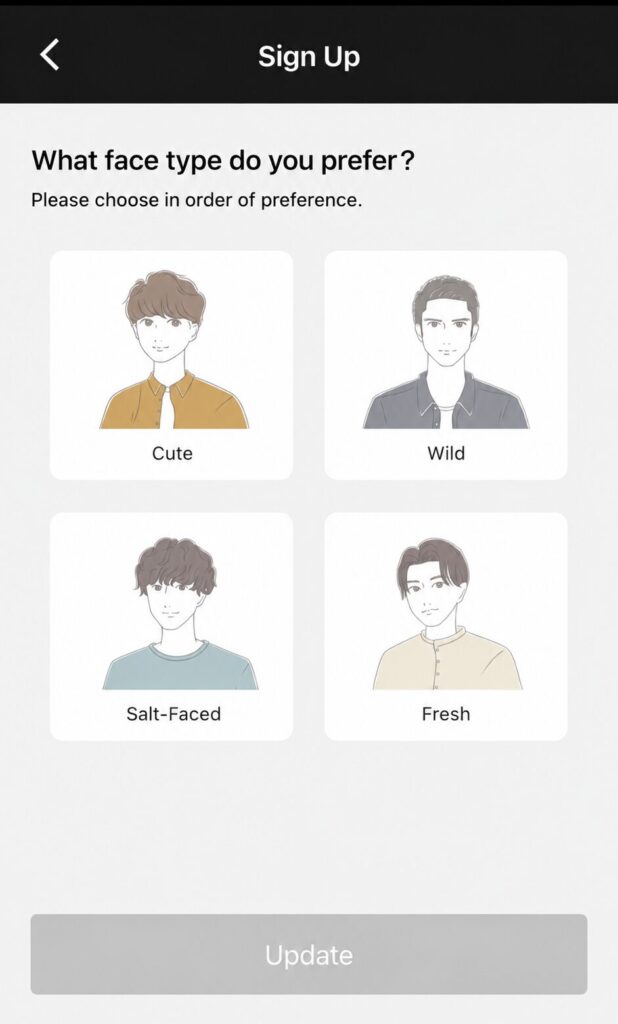
- Partner preferences (age range, education level, salary, physical attributes)
After submitting your profile, it goes through an evaluation process to determine whether you are accepted onto the app. Once approved, you’re officially a user and ready to start your first date.
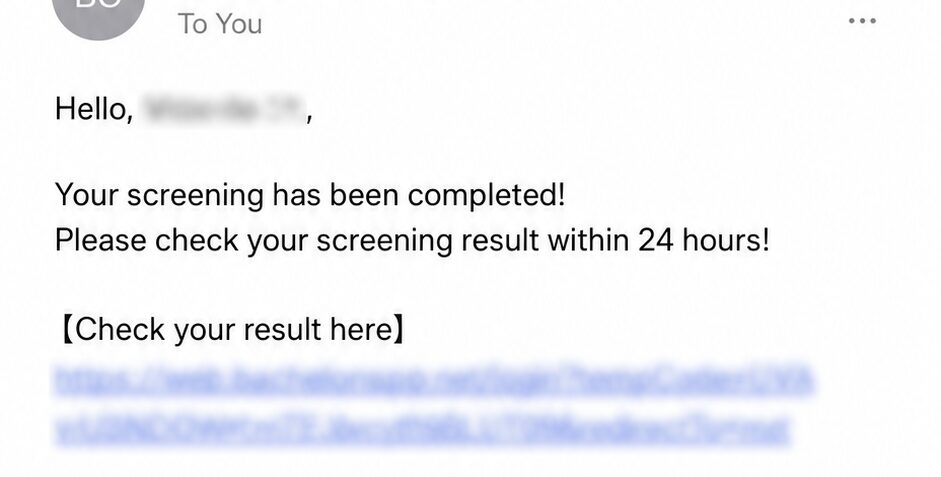
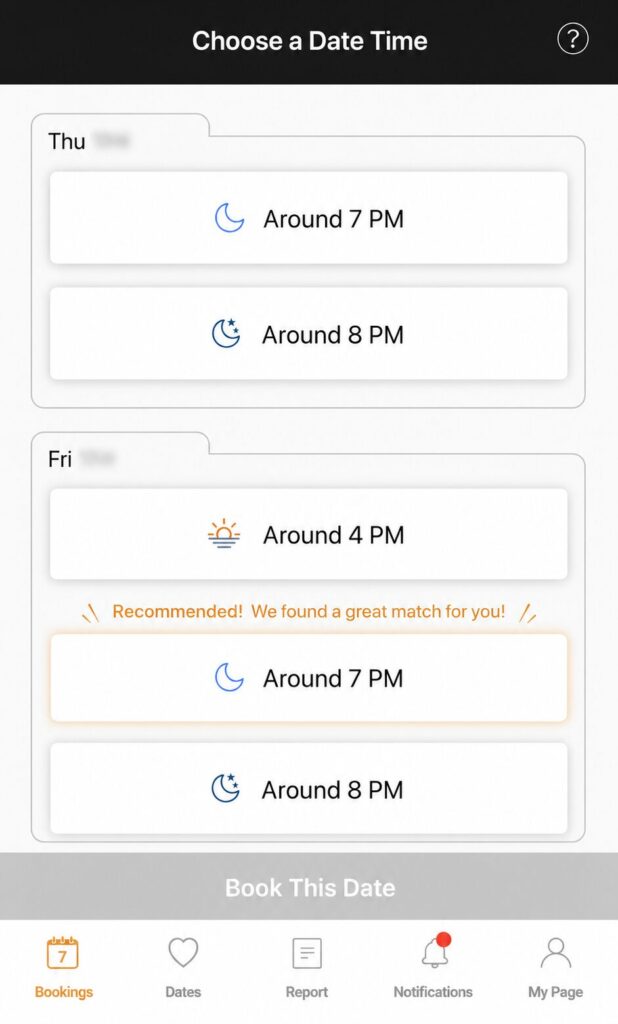
You select available time slots and preferred areas (Shibuya, Shinjuku, etc.).
The app then handles the matching process and notifies both users once a date has been arranged.
You select available time slots and preferred areas (Shibuya, Shinjuku, etc.).
The app then handles the matching process and notifies both users once a date has been arranged.
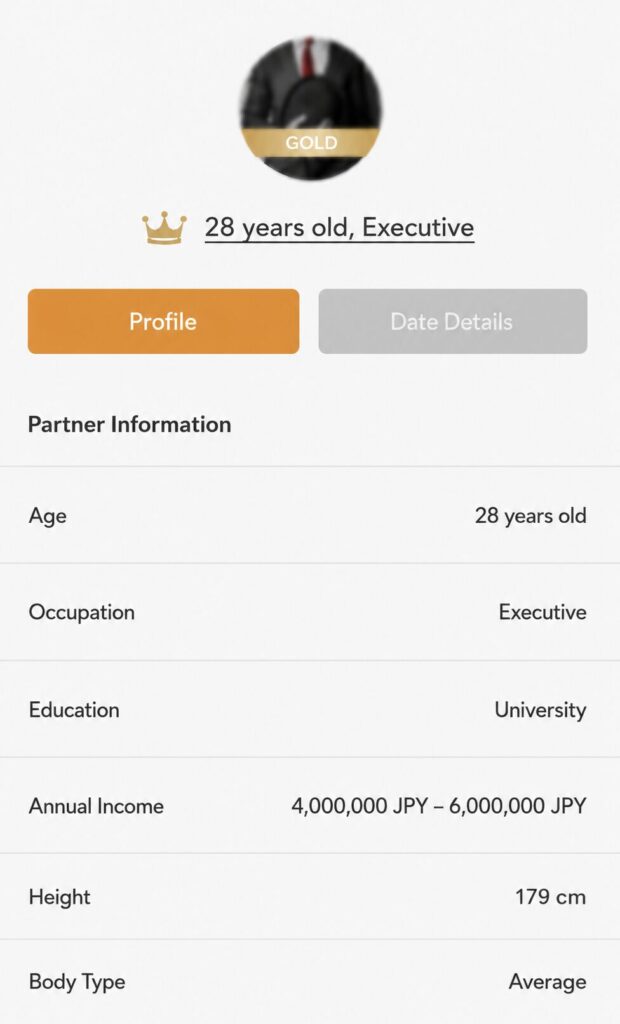
Around 24 hours before the date, you receive your match’s profile, the meeting venue, and access to a temporary chat room.
At this stage, you can confirm the meeting time or suggest an alternative venue if needed. However, once a match has been confirmed, cancellation fees apply if you decide not to attend.
Around 24 hours before the date, you receive your match’s profile, the meeting venue, and access to a temporary chat room.
At this stage, you can confirm the meeting time or suggest an alternative venue if needed. However, once a match has been confirmed, cancellation fees apply if you decide not to attend.
The date usually takes place at a designated cafe and lasts around one hour, although users can continue longer if both agree.
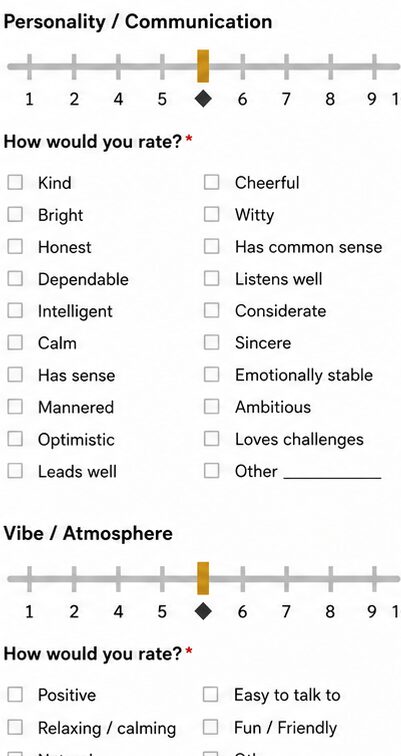
After the date, evaluation is mandatory. Users rate each other on areas such as:
- Their physical appearance
- The conversation quality
- Overall experience
- Interest in meeting again
There is also an option to provide written feedback, which is encouraged as part of the app’s AI learning process.
Once the evaluation is submitted, the chat room closes permanently.
After the date, evaluation is mandatory. Users rate each other on areas such as:
- Their physical appearance
- The conversation quality
- Overall experience
- Interest in meeting again
There is also an option to provide written feedback, which is encouraged as part of the app’s AI learning process.
Once the evaluation is submitted, the chat room closes permanently.
After every two dates, the app shares how others have rated you. These scores feed back into the matching system and influence the quality of future matches.
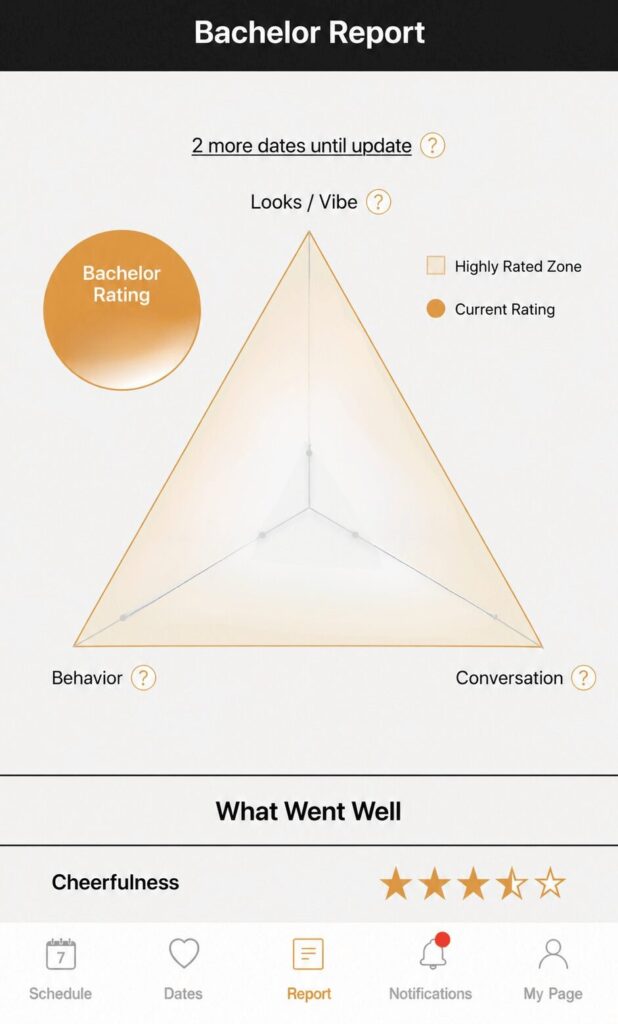
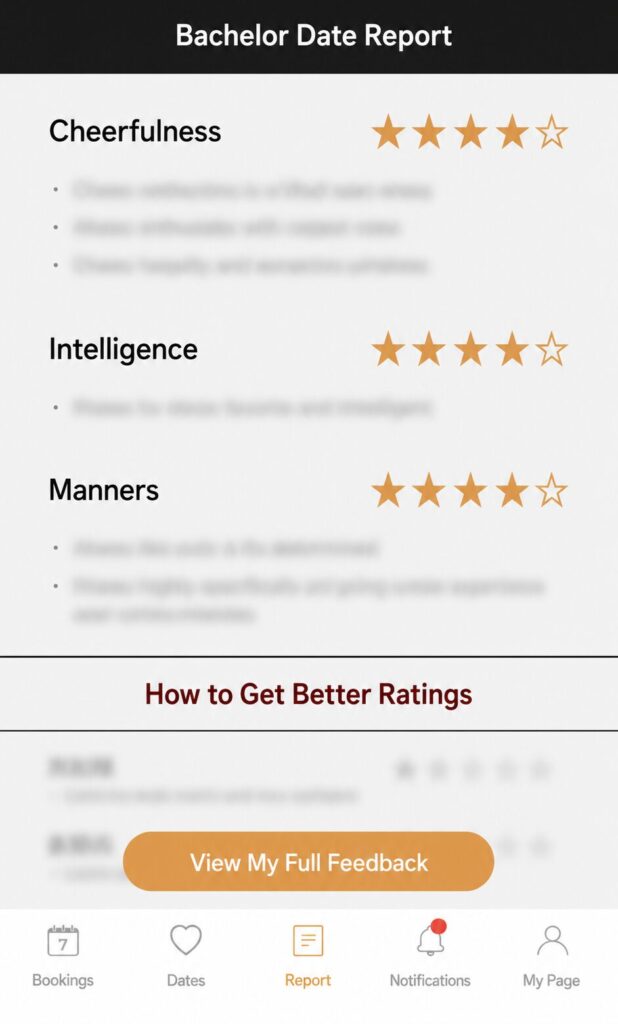
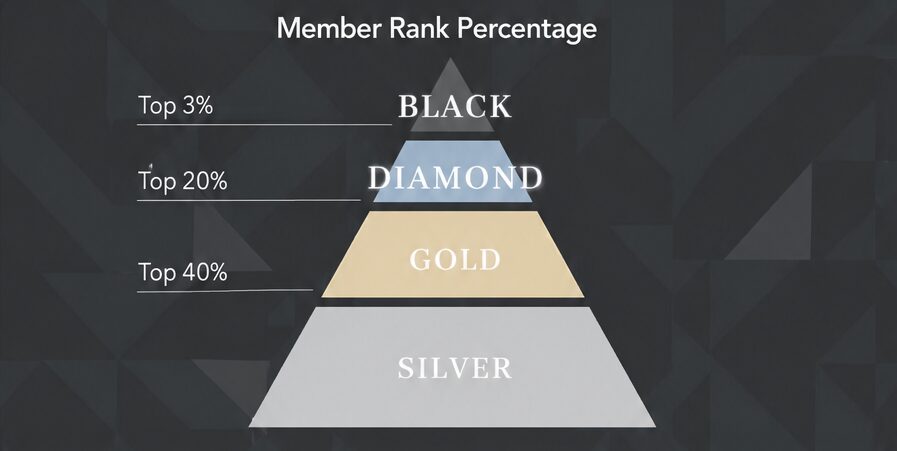
After every five dates, your tier status is evaluated. Users may be ranked into tiers either Silver, Gold, Diamond, or Black. Higher tiers can unlock matches that better fit your stated preferences, along with other benefits linked to your rank. This rank can go up or down depending on your evaluation score.
What Makes Bachelor Date Different from Other Dating Apps
1. It Prioritizes Actual Dates Over Endless Browsing
Most dating apps are designed around in-app engagement: browsing profiles, swiping, messaging, checking notifications, and returning to the app repeatedly.
Bachelor Date takes a different approach. It optimizes for time outside the app by pushing users toward real-life meetings as quickly as possible. This forced efficiency is both the app’s strength and its weakness.
For male users, the app offers a fixed number of guaranteed monthly matches (unlimited for female users), while cancellation fees create additional commitment. The result is a system where users are strongly encouraged to show up, even when they may not feel especially excited about a particular match.
2. It Turns Dating into Performative Behavior
Bachelor Date’s evaluation system may be its most revealing feature. It makes explicit what is usually implicit in dating: people are always assessing and being assessed.
All dating apps involve some form of invisible ranking. Algorithms decide who appears, who gets boosted, and who gets buried. Users constantly assess each other through photos, bios, messages, and response speed.
Bachelor Date makes this hidden logic visible. By showing users that ratings directly affect future matches, the app reveals the game-like structure behind dating platforms.
In Bachelor date,
Low Rating
The AI determines you as “unpopular/undesirable,” and the quality of your match candidates decreases
High Rating
The AI determines you as “high-spec/elite,” and prioritizes introducing you to “better” candidates.
Again, this transparency is both refreshing and uncomfortable. It gives users a clearer understanding of how the system works, but it also risks turning human interaction into performance management.
The User Experience: How the System Shapes Behavior
The Performance Effect
Knowing that I would be evaluated changed how I behaved on dates. I became more aware of how I spoke, how I listened, how I reacted… but what felt even more unsettling was the act of evaluating someone else after just one hour.
My thoughts spiraled:
- How much can I really know about someone after 60 minutes?
- Why should my impression become part of their score?
- And if I feel uncomfortable being evaluated this way, why am I doing the same thing to someone else?
Bachelor Date places users in a psychologically unusual position. You are both the person being evaluated and the evaluator. You know the other person is occupying the same dual role.
This makes it difficult not to perform. Even when there is no romantic interest, there is still an incentive to show up and behave polished.
Four Behavioral Patterns Emerge
After several dates, I started to notice different types of users emerging.
Genuine Partner Seekers
These users were sincerely focused on finding a long-term partner.
Self-Improvement Users
Some users seemed to treat the dates as practice. For them, the app provided opportunities to improve conversation skills, gain confidence, or learn how to interact with different types of people.
Rating Optimizers
These users appeared highly skilled at creating a positive first impression. They were polite, attentive, complimentary, and sincere. However, once the evaluation was over and the chat room closed, there was often no continuation.
Social Experimenters
These users seemed curious about the system itself. They used the app to understand what kinds of people they were matched with, how the algorithm responded, and what types of interactions might influence ratings.
By my fifth or sixth date, I realized I’d shifted into this last category. I stopped evaluating dates primarily on romantic potential and started analyzing patterns: What types of people was the algorithm matching me with? How did my ratings affect subsequent matches?
The efficiency made each date feel lower-stakes, which was both liberating and oddly depersonalizing.
What Bachelor Date Reveals About Gamified Romance
Every dating app contains systems of visibility and ranking. Bachelor Date simply makes those systems more obvious, and it’s fascinating to see how quickly people adapt to this. Once people understand that certain behaviors may influence their future matches, the experience can shift from “meeting someone” to “performing well within the system.”
I’m not saying that the app is bad. In fact, for some users, the structure may be genuinely helpful. It reduces mental workload, and creates real opportunities to meet people outside one’s usual social circle. However, I couldn’t help but step back and reflect on the very purpose of dating apps.
- Does knowing the metrics make users more self-aware, or more strategic?
- Does explicit evaluation reduce uncertainty, or does it increase anxiety?
- Does the tier system help users improve, or does it encourage people to optimize for ratings rather than connection?
Conclusion
From a UX lens, Bachelor Date made me hyper-aware of dating as a designed system.
In one month, I met more people than I probably would have encountered organically in the same period. However, somewhere between guaranteed matches, post-date scoring, and tier progression, dating stopped feeling like exploration and started feeling like a skill to develop. A game to master.
Maybe this is what happens when dating is fully systematized.
Bachelor Date remains one of Japan’s more intriguing experiments in applying AI, efficiency culture, and gamification to human connection. Whether it represents the future of dating or a uniquely Japanese approach that may not translate elsewhere remains to be seen.
What is clear, however, is that this app does more than arrange dates. It exposes the mechanics behind modern romance and asks users to participate in them consciously.
I feel that makes it more than a dating app. It makes it a case study in how design shapes behavior and identity.
UX Research & Strategy
Learn more about Uism’s UX research services.