Article Summary
- Uism volunteers visited Kururu Ebisu to participate in a full-day program serving 12 members with intellectual disabilities, observing their daily care and participating in a myriad of activities administered by professional staff.
- Spoken words are only part of the story; choices, hesitations, repeated actions, and facial expressions provide crucial evidence about user experience. Researchers must consider nonverbal cues, especially when verbal reports are limited, to gain deeper, holistic insights.
- In inclusive design, it is necessary to understand the holistic experience of a person’s family, caregivers, staff, and the physical and digital environments in context for full understanding.
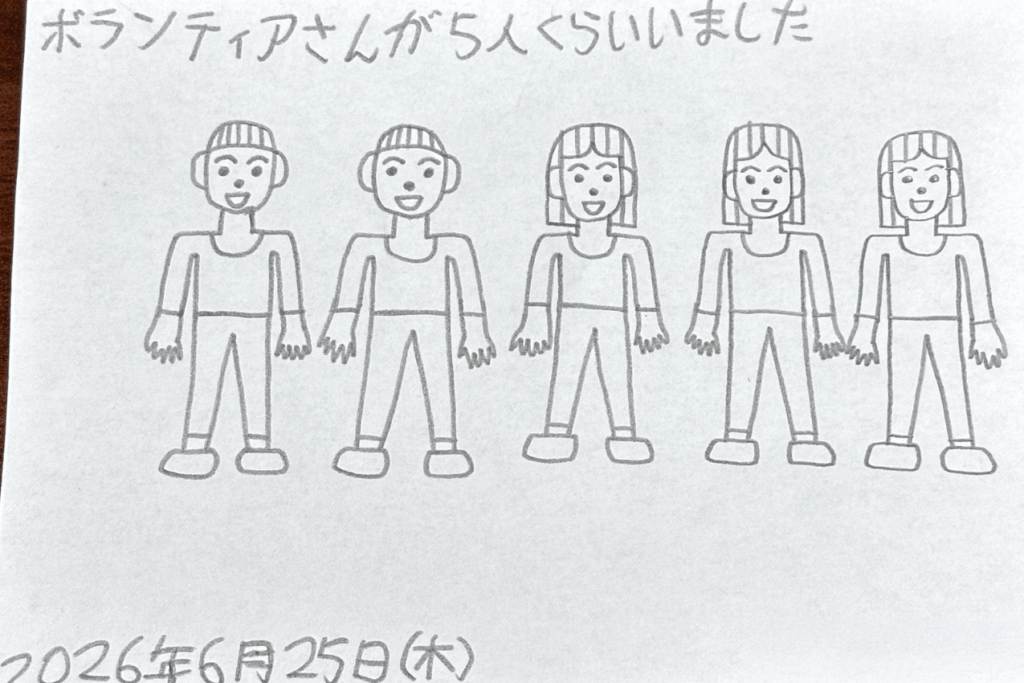
On June 25th, 2026, the Uism team visited Kururu Ebisu, a day-support center in Shibuya Ward that provides daily activities and care-taking for people with intellectual disabilities that require a higher level of support. This visit was made possible via the local social welfare center, the Shibuya Volunteer Center. Kururu Ebisu is a facility where individuals spend their daytime hours engaging in various programs such as creative activities, physical exercise, music, and gardening. Daily activities are tailored to each user’s condition and interests, with staff members carefully supporting each individual’s unique way of participating.
Uism also conducts research and evaluation related to accessibility and inclusive design. When considering the usability of products and services, it is imperative to understand the environment in which the individuals interact, who they are with, how they express their intentions, and the type of support they receive, rather than just focusing on the features or interface. This visit to Kururu Ebisu was not charity work or some one-sided offer. Rather, it allowed us to be welcomed into the everyday environment of the people at Kururu Ebisu, spending time together and rethinking communication, participation, support, and the environment.
Daily Activities at Kururu Ebisu
We arrived early at the facility to introduce ourselves both to the staff and attending members. These members, 12 in total for the day, had arrived by bus from around the Shibuya ward. As one of the staff mentioned, it was rare for them to welcome outside visitors, so we imagined the excitement or nervousness from meeting new people. We were pretty nervous ourselves, initially unsure how the day would go, but our nervousness was soon dashed by the warm, eager greetings we received from the professional staff and some of the more outgoing members!
Before the first activity, everyone warmed their bodies up with radio exercises, a classic Japanese start to the day. With that finished, it was time to separate into groups for activities. Kururu Ebisu divides its days into 3 “periods” with 1st and 2nd period lasting an hour and 3rd period wrapping up the day in half an hour, with a long break for lunch in between 1st and 2nd period. Uism members participated in as many activities as possible, and we separated our group so that at least one person would be able to join every activity.
In 1st period, one group went to the nearby garden to weed and tend to the sunflowers while the other group stayed inside for music time. The sunflower group had the opportunity to chat with the members, learning of their interests and observing how they tackled their tasks in the garden with gusto.
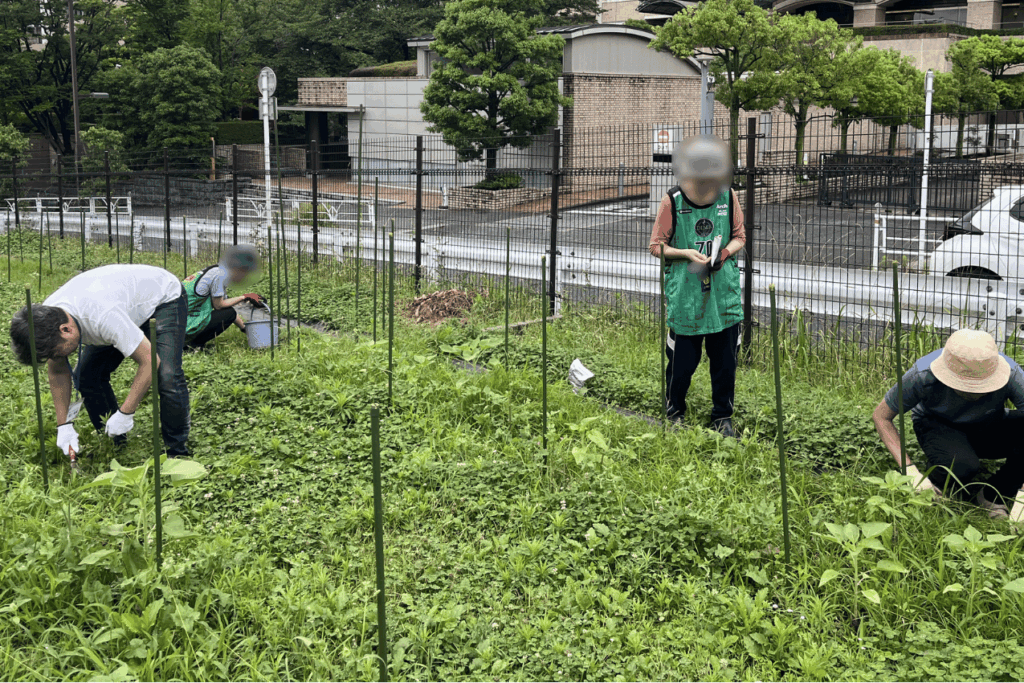
One person I was walking with wasn’t too communicative, but she did tell me she loved coffee. Every café or vending machine we passed on our way to the garden, she would point at with a lot of energy. She also liked Sailor Moon and was happy to show me her Sailor Moon socks.
The music group instead sang songs and played instruments together. Everyone had the chance to play a variety of instruments and it was clear who had their favorites. There was a sense of cooperation and camaraderie among the members though, and they were happy to interact and “jam out” together with us. The staff were especially coordinated, and skilled. The main coordinator for the activity used to be a music teacher and she conducted the class with patience and adaptability, allowing all members to participate comfortably.
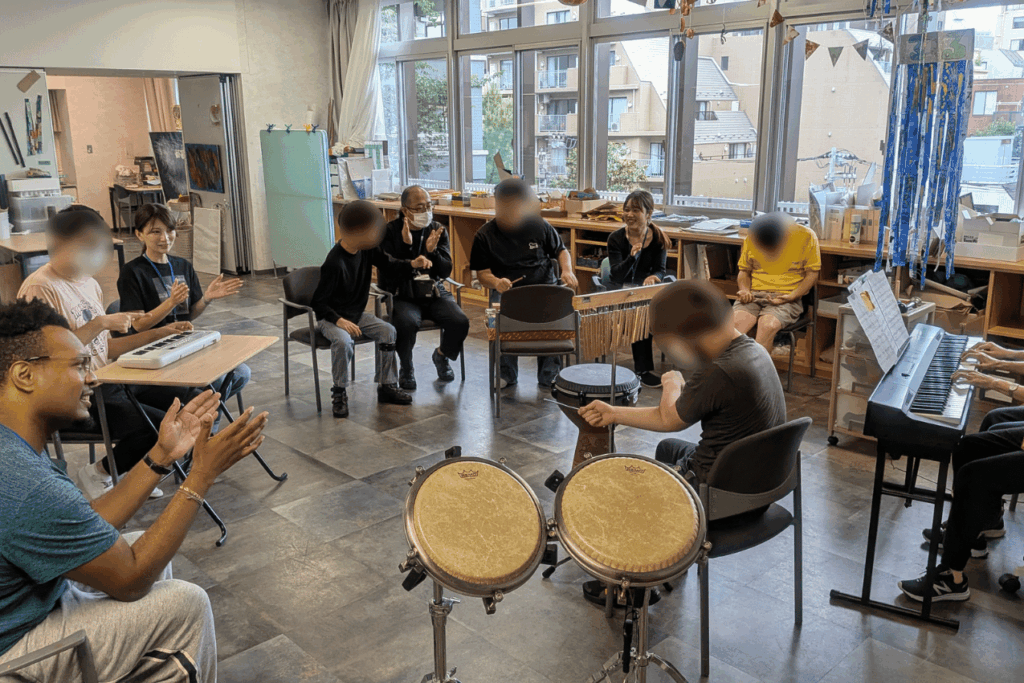

I used to teach in Japan, so I’m used to seeing student-teacher ratios upwards of 40 to 1. But in this setting, it struck me how crucial care personalized to each individual is, implying a need for a lower ratio. I counted the staff at Kururu Ebisu, and it’s wonderful to see them operating with a high number, almost 2-1 ratio.
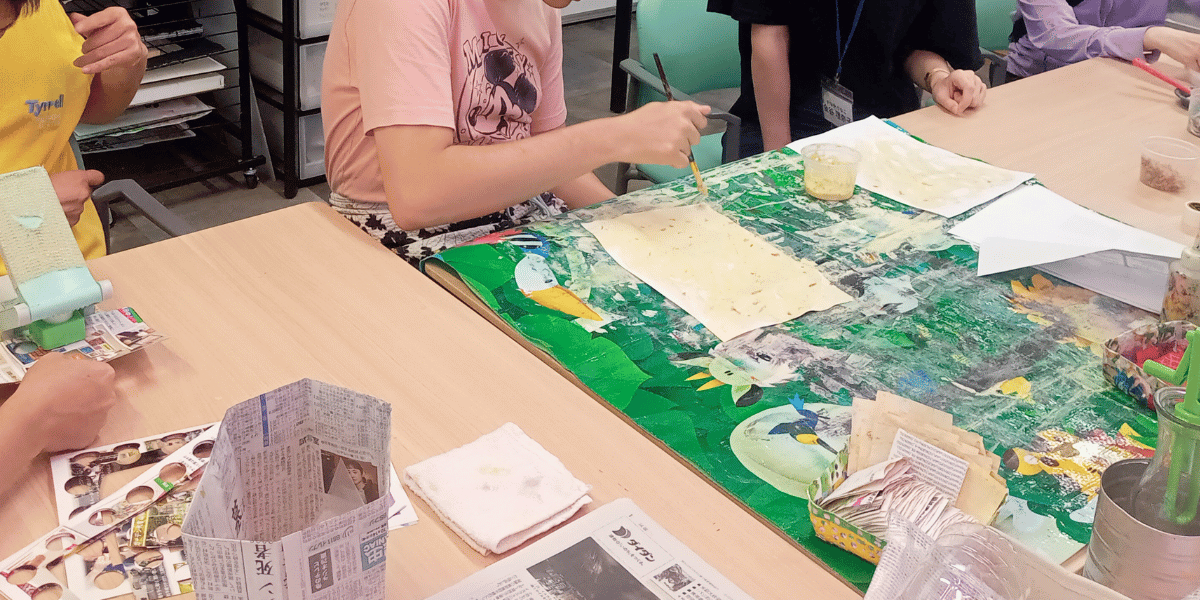
The afternoon activities were divided into light physical stretching and two artistic activities, painting and embroidery. During lunch we had the chance to walk around and view the works of art displayed on the wall and the crafted bags or other accessories. The artwork was incredibly profound with vivid blends of colors. The members’ names were displayed under their work, allowing us connect the art to the individual and giving us a wealth of information on how their personality and inner workings are translated to canvas.
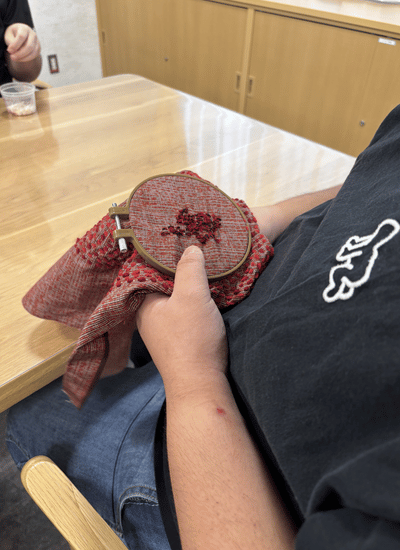
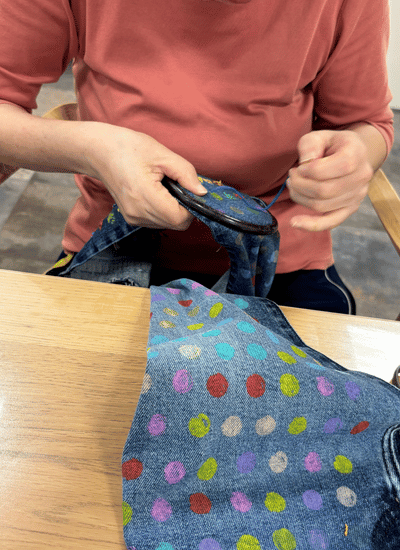
I was assisting a woman, handing her threaded needles to use. Once she finished sewing, she’d hand the needle back to me. So I’d let her choose the color of the thread she’d like to use next and thread it for her. When I asked, ‘Which color would you like next?’ she’d peek inside the basket and choose without hesitation. I was impressed by how she selected colors evenly from the wide selection to create a balanced piece.
Reflection
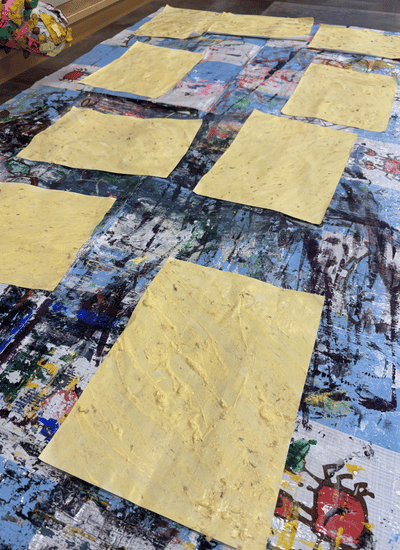
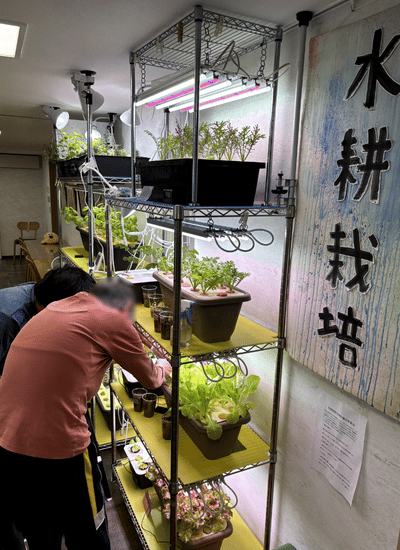
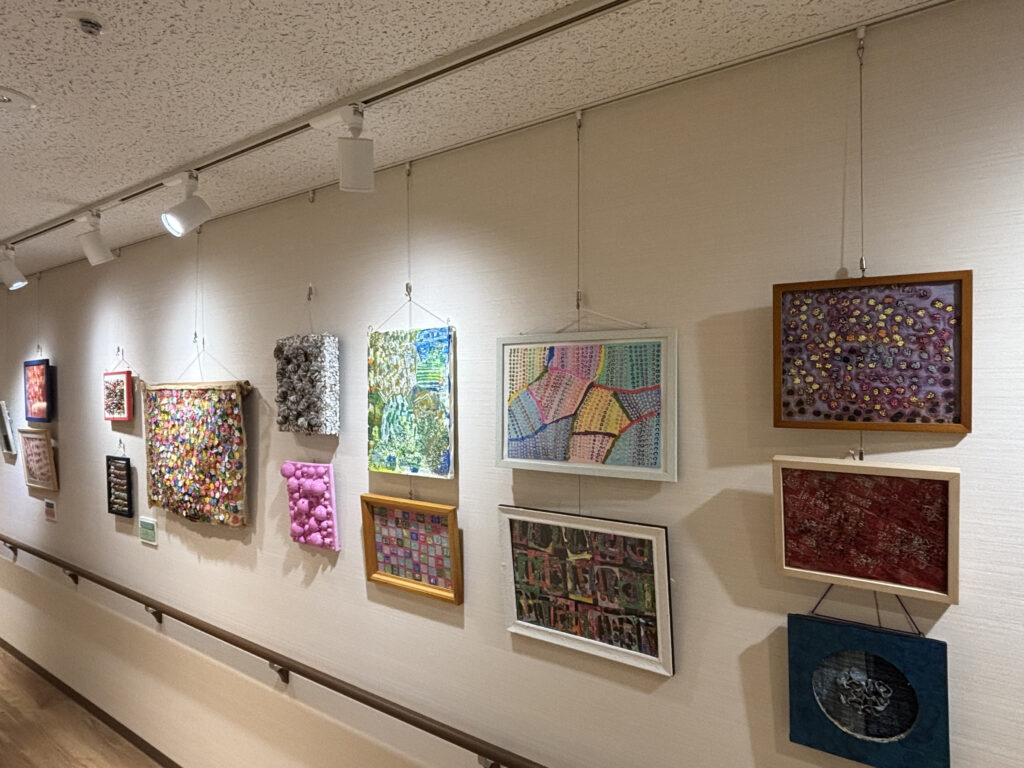
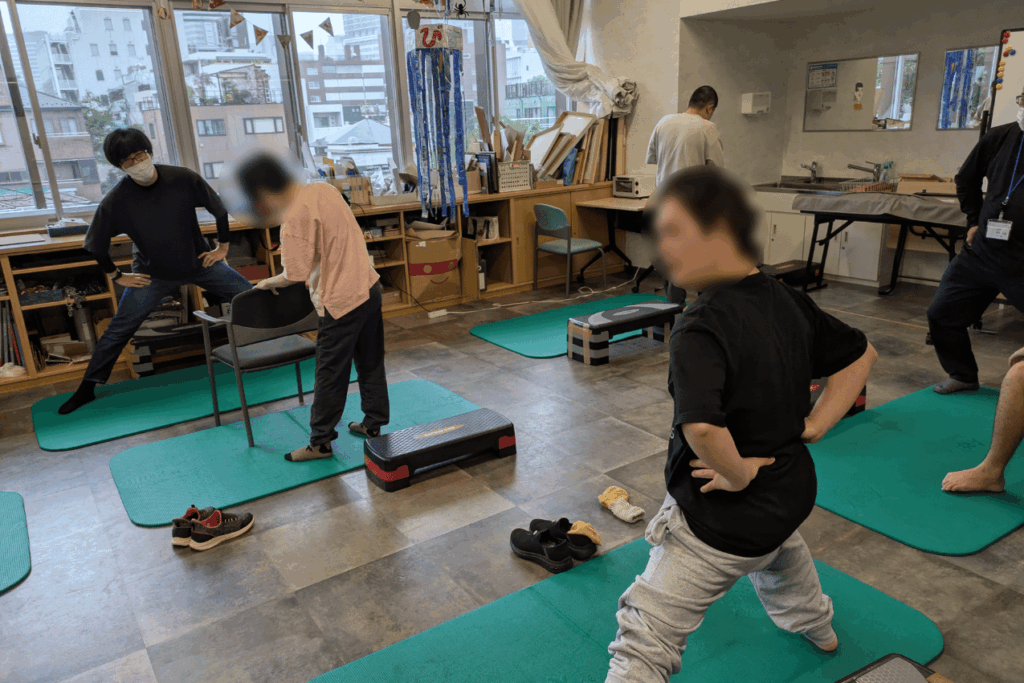
What left an impression on us by the end of the day was how the members each expressed their intentions and interests in different ways. Some talked a lot, while others communicated more through facial expressions or gestures, pointing at things they like, reacting to sounds, choosing colors, repeating actions, or purposefully taking pause. These actions seemed to convey their intentions, concerns, comfort, anxiety, or joy.
Simultaneously, there was much to learn from the staff’s engagement. They didn’t just push activity after activity, but observed each member’s condition and reactions, offering clarification, waiting, maintaining distance, lending a hand, or providing alternatives. These small adjustments supported each members’ participation and showed the attention taken on the granular level. This is more than “comprehensive support.” Observing and aligning with a person’s pace and expression builds an environment where they can exist and participate comfortably.
Moreover, a diagnosis or type of disability doesn’t define the person. Knowing specifics such as their love of coffee and Sailor Moon, their favorite instrument in music, or their artistic skills and interests reveals their preferences, expressions, and talents.

This volunteering experience helped me reflect on the assumptions I brought with me and reminded me of the importance of seeing each person beyond their diagnosis. I was also inspired by the creativity, artistic sensibility that many people demonstrated in their own areas of interest.
Insights for UX Research and Inclusive Design
This visit reinforced that inclusive design doesn’t start from abstract attributes or generalized needs. By experiencing people in real environments, we see how they spend their time, react, and participate. This context is crucial.
Related Article
UX research with people with disabilities requires thoughtful preparation, from communication methods to the research environment. See our related article, “Accessibility in UX Research.”
Capturing Non-Verbal Reactions
In UX research, spoken words are important but don’t tell the whole story.
- What is chosen? What is avoided?
- What expressions do they make?
- What actions do they take or repeat?
These non-verbal reactions are essential for understanding an experience holistically. Particularly when dealing with users who find verbal explanations or traditional interviews challenging, researchers need not only questioning skills but the ability to observe, wait, and interpret environmental interactions. Even someone who can express themselves clearly with words can convey deeper insights when their actions and behaviors are taken into account.
Viewing Support Structures and Environments as Part of the Experience
Accessibility isn’t just about the functionality of products or services. It includes family, caregivers, staff, the physical and digital environment, activity flow, and external cues or assistance. Evaluating or designing requires considering not just the person in isolation but the support structures and environments around them.
This perspective applies across various domains, including healthcare, welfare, education, public services, and digital products, which we extensively engage in. Instead of viewing the user as just an attribute or diagnosis, understanding how they live, express themselves, and engage in context reveals where inclusive design truly begins.
Accessibility isn’t solely about creating usable conditions. It’s about enabling and maintaining participation, choice, self-expression, and dignity. Continually exploring what is necessary for these aspects is crucial for those of us involved in UX research and inclusive design.
Related Article
This perspective also applies to UX for older adults, where design should support confidence, choice, and dignity—not just ease of use. See our related article, “An Introduction to UX Design for Older Adults.”
Conclusion
By being welcomed into the daily activities at Kururu Ebisu, we gained significant insights and reflections.
The expressions and choices of the users, the attentive and flexible approach of the staff, and the naturally emerging communication within activities all provided valuable insights for considering inclusive design.
We are deeply grateful to the staff and users of Kururu Ebisu, Shibuya Volunteer Center, and everyone who helped facilitate this opportunity.
As Uism, we intend to continue contributing to the creation of products and services that are easier to use and participate in by engaging with real people, places, and contexts.
Related Links
UX Research & Strategy
Learn more about Uism’s UX research services.
Related Articles: